
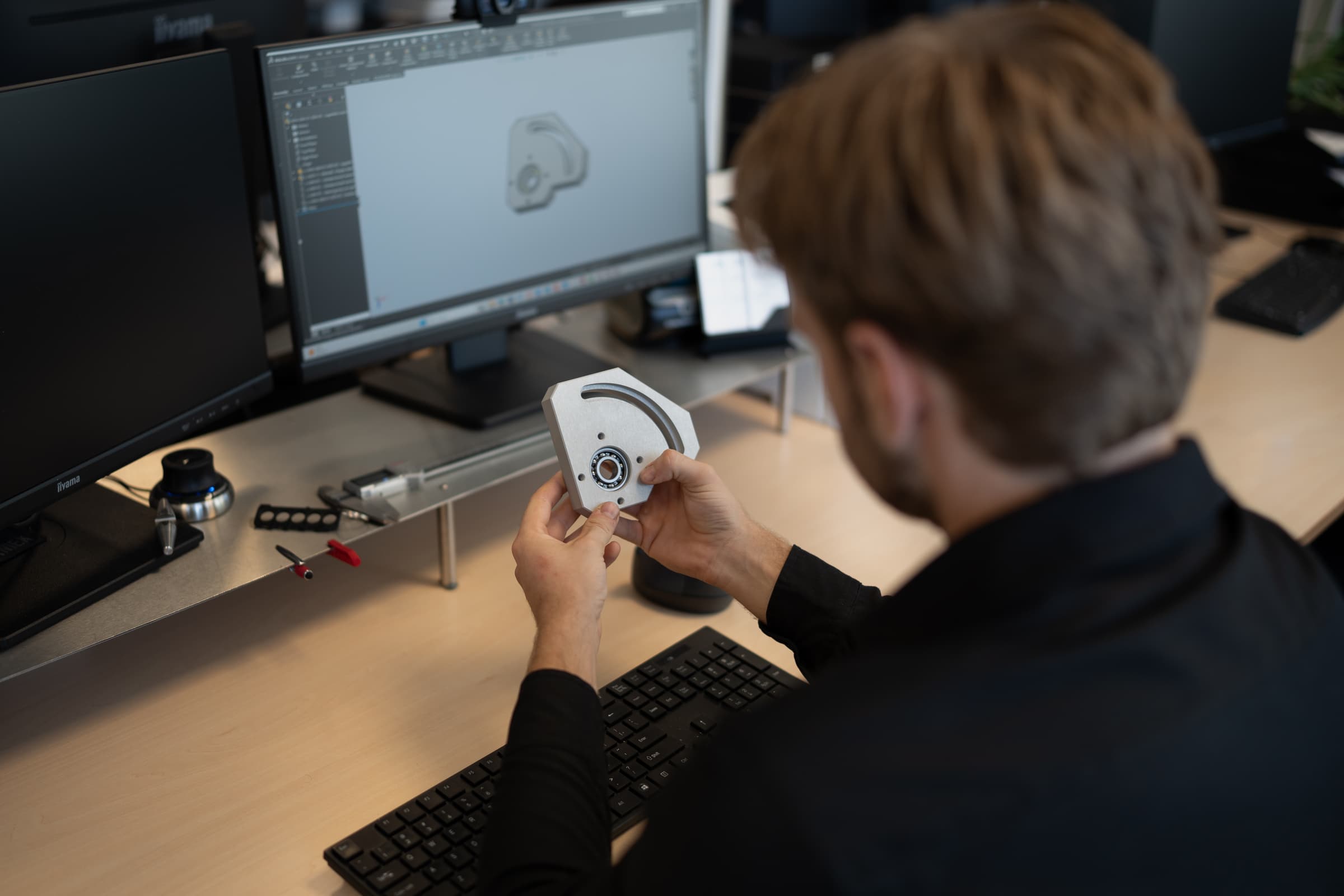
3D printing
For a prototype, a fixture or a clamping setup, printing is often faster and cheaper than machining. It quickly puts a model in your hands to test and validate, before it costs material and machine time.
What you use it for
3D printing does not replace machining, but in certain situations it can add value.
Checking the shape
A printed model shows straight away whether the part fits and whether the assembly works. You catch mistakes before the part is made in metal.
Functional parts
Covers, holders, guards and guides in plastic. With the right material, fibre-reinforced for example, a print can take a serious load as well.
Jigs and fixtures
Clamping aids, gauges and assembly fixtures we print for our own workshop and for customers. Quickly made, quickly changed.
Parts that no longer exist
From an old plastic part we make a model and print a replacement: reverse engineering. Handy for machines that no longer have a supplier.
Presentation models
A model you can hold convinces faster than a render, whether it is for your customer or for your own management.
Combining with machining
Often the best solution is a mixed one: the load-bearing part milled, the rest printed. We make both and put them together.
Printing or machining?
We will not sell you a print when milling is the smarter option, or the other way round. This is how we look at it:
Printing is the obvious choice
For one piece or a few, for a shape that is not fixed yet, and for fixtures of which you may want a different one tomorrow. With fibre-reinforced material a load-bearing part can be printed as well.
Machining is the obvious choice
As soon as strength, temperature, dimensional stability or surface finish counts, and as soon as the quantities go up. Turning or milling is then usually more cost-effective as well.
Often it is both
The load-bearing part milled, the rest printed. Or printed first to check it, then machined in the real material. We make both and put them together.
Materials
We print on a BambuLab X1 Carbon. Besides the standard plastics we also print technical and fibre-reinforced materials: strong, heat-resistant or chemically resistant, and glass-filled for extra stiffness with minimal distortion. Thanks to the AMS changer system a print can combine several colours or materials.
- Standard
- PLA, PETG, ABS
- Carbon-fibre reinforced
- PA6-CF
- Glass-fibre reinforced
- PA6-GF, PET-GF
- Technical
- PC, ASA, TPU and more
The result is a functional, durable part that can be used straight from the printer. Which material fits, we discuss per job.
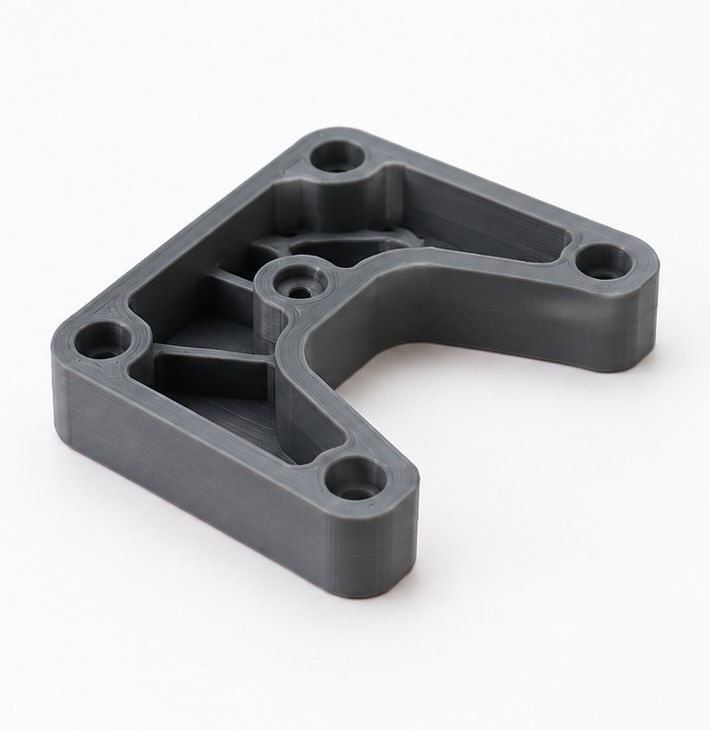
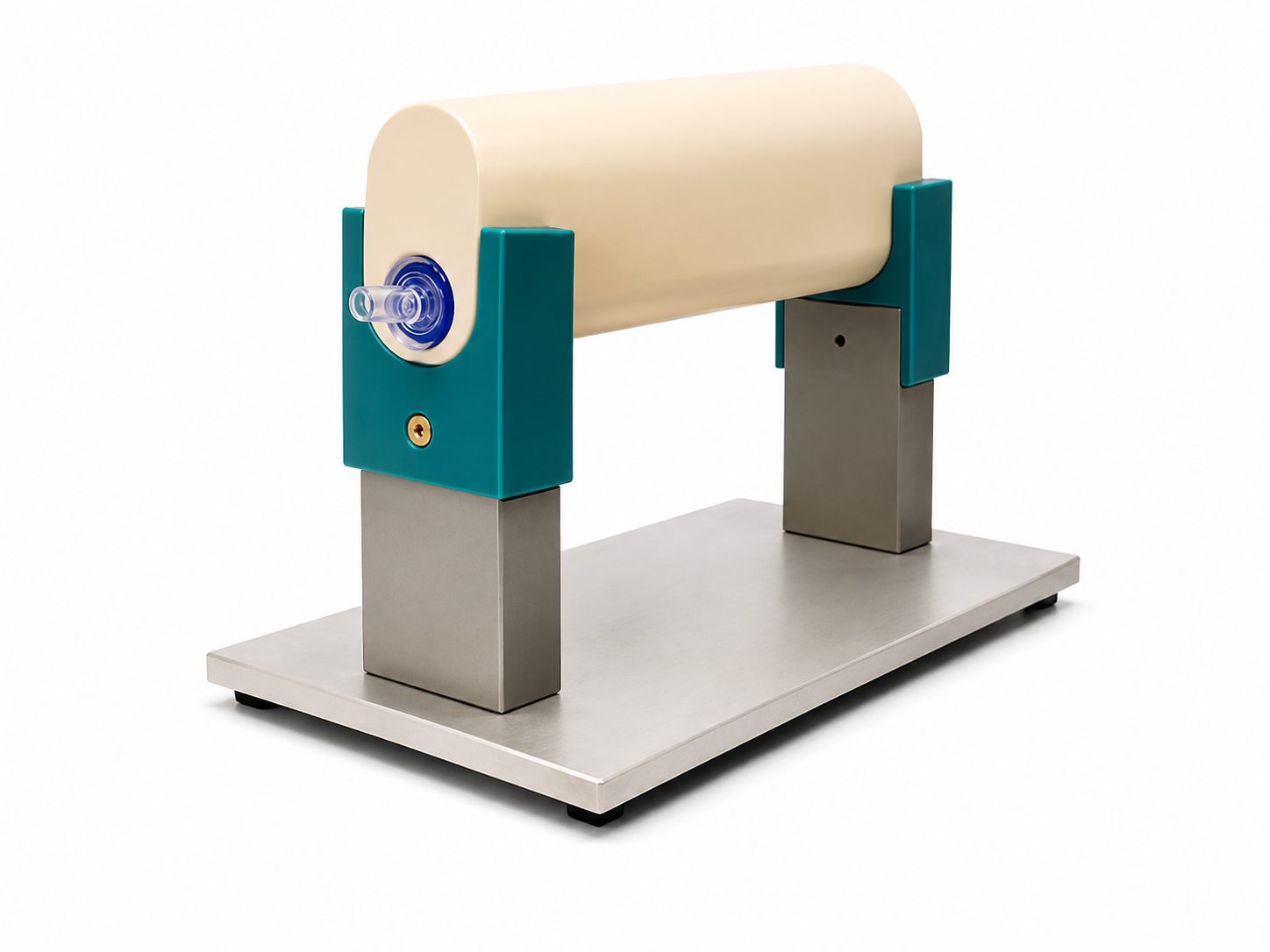
Upgrade of an existing assembly tool
For a customer we modified a tool that we had developed earlier for fitting non-return valves onto hoses. The requirements had changed, so the design changed with them.
What is special about this version: because of the material requirements it is printed instead of milled. Exactly what we use 3D printing for: sometimes printing is simply the better route, and then that is the one we take.
From file to model
Maximum dimensions we discuss per job. Just ask when you send your request.
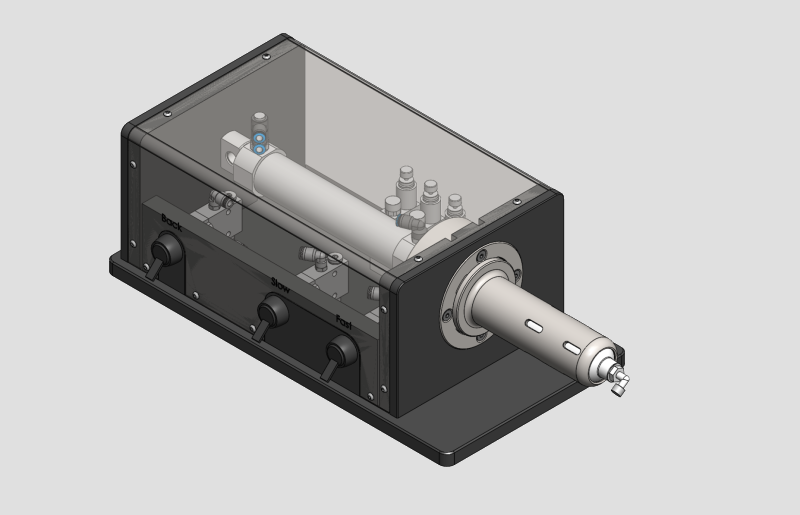
Send us your file and we will look at it
Not sure whether printing or machining is the smarter option? Put it to us and you will get honest advice.